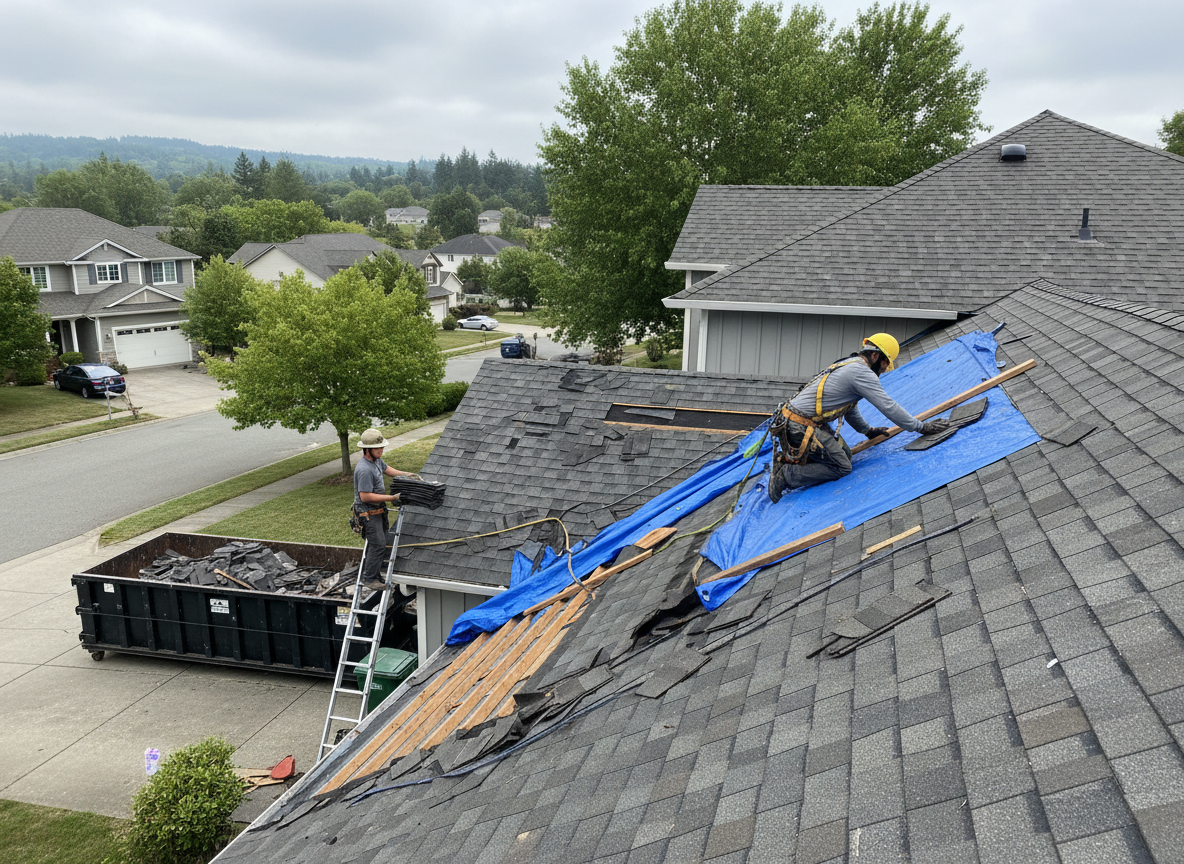
Oakley roofs often face high winds and heavy rain from Ohio River valley storms that drive water under shingles and flashings on older homes built before modern underlayment standards. Crews start by tracing water paths from the ridge down to the eaves, checking for lifted shingles, dented flashing around chimneys, and separated step flashing where two roof planes meet. In Hamilton County the freeze-thaw cycles that follow summer storms can widen small punctures into active leaks within weeks, so repairs focus on replacing damaged sections rather than surface patches that fail the next cold snap.
When hail or falling branches hit asphalt shingles common on Oakley streets, crews look for granule loss and cracked mats that allow UV exposure to degrade the felt underneath. They also inspect attic ventilation because blocked soffits in these tightly spaced lots trap moisture after storms and accelerate rot along the decking edges. All work follows Cincinnati building code requirements for nailing patterns and ice-and-water shield placement at eaves and valleys to prevent future wind-driven rain entry.
Homeowners sometimes overlook damage on the north-facing slopes that receive less direct sun and stay wet longer after storms. Fixora Dynamics documents every compromised area with photos before any tear-off or overlay begins, then coordinates with the property owner on material choices that match the existing roof profile so the repair blends without creating new weak points at the seams.
Technician insight
In Oakley the thing that catches most people out with storm damage roof repair is the way wind funnels between the close-set houses on these older blocks and lifts shingles on the side walls nobody checks until water shows up in the upstairs ceiling.
Oakley Two-Story After Straight-Line Winds
Wind lifted a row of shingles along the west-facing gable on a 1920s Oakley home. Inspection showed water had already reached the decking under the ridge vent. Crew replaced the lifted course, added new step flashing, and sealed the ridge vent base. No further leaks appeared after the next rain.
How it works
- 1
Initial Inspection
Technician arrives within hours, climbs the roof, and maps every impact or wind-lifted section while checking attic for hidden moisture.
- 2
Documentation and Scope
Photos and written notes are prepared for the homeowner and any insurance adjuster, listing exact locations and material needs.
- 3
Targeted Repair
Damaged shingles, flashing, and underlayment are replaced section by section; new sealant is applied at all penetrations and valleys.
- 4
Final Walk-Through
Homeowner reviews the completed work from the ground and attic, confirming no active leaks and proper drainage before the crew leaves.
Pricing
Upfront quotes after inspection; final cost depends on extent of damage and access on two-story homes.